Other News Releases
For Release: February 13, 2026
Contact: Stanton Florea
NIFC External Affairs
208-387-5437
Arizona provides ideal location for aviation training
BOISE, Idaho. - Wildland firefighters from across the U.S. that specialize in aerial supervision and airtanker operations are convening in Arizona over the next month to prepare for a potentially busy 2026 Fire Year.
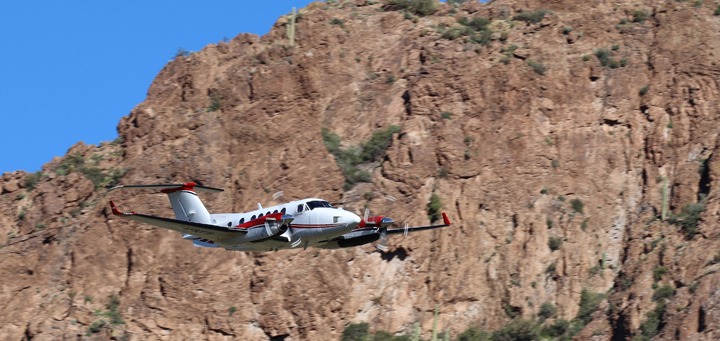
The National Aerial Supervision Training Academy (NASTA) will take place over the next month primarily in two locations: The Phoenix Interagency Fire Center at Mesa Gateway Airport in Mesa, AZ, and at Fort Huachuca in Sierra Vista, AZ. However, the public may see aircraft conducting “practice” water drops in remote locations on the Tonto and Coronado National Forests and other areas.
The academy is the “umbrella” under which about a dozen high level aerial firefighting and support courses are offered, training personnel from numerous agencies to become proficient in a variety of critical skill areas.
Academy courses cover everything from aerial supervision and helicopter coordination to ground-based operations and aircraft dispatching. The courses are standardized across federal, state and local agencies to ensure a unified approach to aviation operations during wildfires on any jurisdiction.
Airspace over wildfires is among the most tightly controlled and requires meticulous coordination. The Aerial Supervision courses that are part of the academy help prepare personnel for navigating that complexity and doing it safely.
The U.S. Department of Agriculture’s Forest Service hosts the training and is joined by personnel from the U.S. Wildland Fire Service, CAL FIRE, the State of Alaska and four military airlift wings that are part of the Modular Airborne Firefighting Systems program, known as MAFFS. This is the 12th annual Academy and expected to be among the largest.
“This is truly a team effort,” said Chris Tipton, fixed wing operations branch chief for the U.S. Forest Service, Fire and Aviation Management. “We couldn’t do it without the cooperation of our other federal, state, local and military partners.”
Consolidating courses under the academy also helps reduce travel costs and avoids duplication of efforts. Agency fire personnel have the chance to complete multiple required aviation courses in a one-stop shopping approach.
“The courses offered as part of the academy are all geared towards attaining qualifications that will better prepare each firefighter for the season ahead” Tipton said.
Weather, topography and access make Arizona an ideal location for aerial fire training. Clear skies reduce the chance for lost training time due to inclement weather, and the Phoenix Interagency Fire Center can accommodate both the large number of enrolled students as well as the wide array of aircraft being used for the training.
The academy will conclude on March 11.
Photo by USDA Forest Service photo by Amanda Oliver.


